“With keen insight and drawing on his frontline sporting experiences, Marc unpacks the hidden forces that drive exceptional teams.”
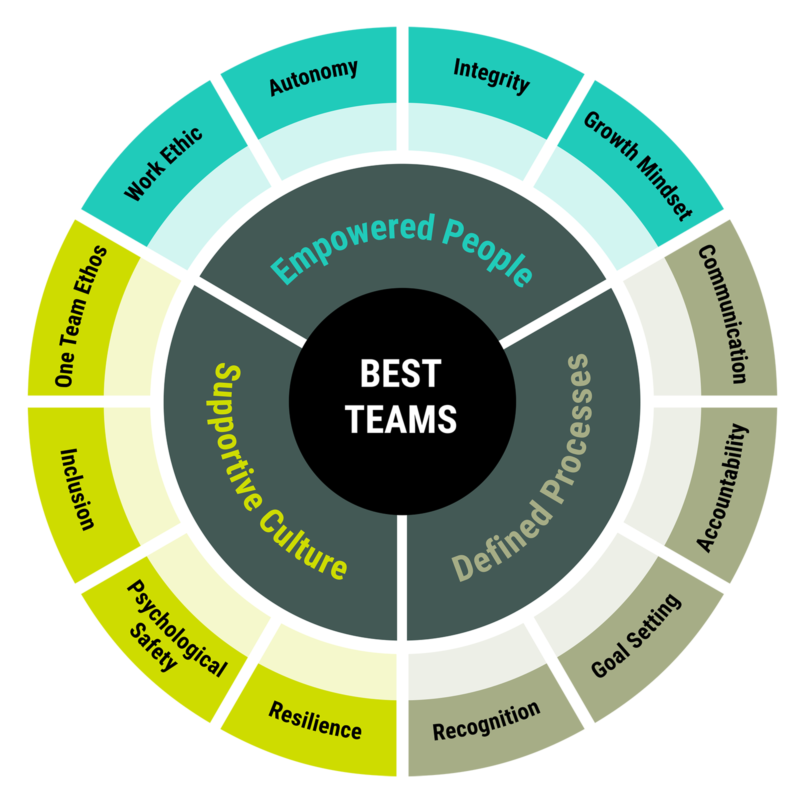
Empowered People
Work Ethic: The level of commitment, diligence, and effort team members put into their work.
1
Team members lack motivation, frequently miss deadlines, and produce subpar work with little concern for quality.
2
Team members complete their tasks but lack consistency in diligence and commitment to excellence.
3
Team members take pride in their work, consistently go the extra mile, and hold themselves to high quality standards.
Autonomy: The degree to which team members are trusted to be able to make decisions, take initiative, and manage their tasks or solve problems independently.
1
Team members constantly wait for direction, avoid decision-making, and struggle with self-management.
2
Team members work independently but often seek unnecessary approvals or struggle with prioritisation.
3
Team members proactively tackle challenges, make informed decisions, and confidently manage their tasks.
Integrity: The extent to which team members act honestly, transparently, and in alignment with ethical principles, even during challenging times.
1
Team members hide mistakes, act dishonestly, or prioritise personal gain over team success.
2
Team members generally act with integrity but may avoid difficult truths or take the easier route when faced with tough choices.
3
Team members are transparent, uphold strong ethical values, and courageously stand by what is right even when not popular with others.
Growth Mindset: The degree to which team members embrace challenges, seek feedback, and continuously learn and improve.
1
Team members resist change, avoid feedback, and show little interest in learning or improving.
2
Team members are open to growth but struggle with setbacks or fail to apply feedback effectively.
3
Team members actively look for learning opportunities, embrace challenges, and use feedback to drive improvement.
Defined Processes
Communication: The effectiveness and clarity in how team members share information, listen to one another, and adapt their messaging to different audiences.
1
Communication is unclear, inconsistent, or ineffective, leading to misunderstandings and frustration.
2
Communication is generally effective but lacks adaptability, clarity, or consistency across different situations.
3
Communication is clear, tailored to the audience, and ensures alignment and understanding across the team.
Accountability: The clarity of roles, responsibilities, and expectations, and the extent to which team members take ownership of their actions and results.
1
Responsibilities are unclear, and no one is held accountable for failures or poor performance.
2
Some accountability exists, but expectations are inconsistent, and follow-through is weak.
3
Team members take full ownership, expectations are clear, and accountability is consistently reinforced.
Goal Setting: The process of defining, aligning, and pursuing objectives that guide the team’s work and measure success in line with their overall vision and strategy.
1
Goals are vague, unrealistic, or misaligned with the team’s objectives.
2
Goals exist but may lack clarity, ambition, or realistic timelines.
3
Goals are well-defined, strategically aligned, and drive meaningful progress.
Recognition: The extent to which team members' contributions and achievements are acknowledged and valued.
1
Recognition is rare, and accomplishments go unnoticed, leading to low morale.
2
Some recognition happens, but it is inconsistent or lacks genuine impact.
3
Achievements are regularly celebrated, and team members feel genuinely valued for their contributions.
Supportive Culture
Resilience: The ability of team members to adapt to change, recover from setbacks, and support each other during challenges.
1
The team struggles with change, lacks adaptability, and becomes demotivated by challenges.
2
Team members can recover from setbacks but struggle with consistency or proactive adaptation.
3
The team embraces change, supports one another, and thrives in the face of adversity.
Psychological Safety: The extent to which team members feel comfortable expressing ideas, voicing concerns, and taking risks without fear of negative consequences.
1
Team members fear speaking up, avoid risks, and withhold honest feedback.
2
Some team members feel comfortable sharing, but others hesitate due to fear of judgment.
3
Team members openly share ideas, challenge each other constructively, and feel safe taking risks.
Inclusion: The degree to which all team members feel valued, respected, and empowered to contribute their best work.
1
Some team members feel excluded, disrespected, or unable to share their perspectives.
2
Inclusion is acknowledged, but certain voices are still underrepresented or overlooked.
3
The team actively fosters a culture of respect, mutual understanding, and full participation from each member.
One Team Ethos: The sense of unity, collaboration, and shared responsibility among team members toward collective success.
1
The team operates in silos, with little collaboration or sense of unity.
2
The team works together but still has divisions, with knowledge-sharing being inconsistent.
3
The team operates with strong cohesion, openly shares insights, and collectively drives success.